Barndominium Kits in Arizona
Our barndominium kits in Arizona are the structural shell: red-iron frame, secondary framing, roof and wall panels, fasteners, trim and the drawings that go with them, delivered to your land. We can erect the kit with our crews, or you can put it up yourself. Steel is the default here for a plain reason: a 2005 University of Arizona Extension publication names the desert subterranean termite the most destructive termite in the state, and it eats posts and structural timbers, not steel. The other thing a catalogue kit gets wrong is the roof load. The City of Phoenix publishes no ground snow load at all; the City of Flagstaff publishes 60 psf. So we get your jurisdiction's design figures first and size the kit to them.
Barndominium Kits: how the work runs
Four stages, in this order. The sequence matters more than it looks: getting the design figures, the soil report, the water and septic answers and the permits settled before anything is fabricated is what keeps an Arizona build from stalling.
Size, layout and the shop-to-living split
We start with footprint, eave height, door and window openings, and how much of the building is living space and how much is shop. That split drives the frame more than square footage does. In the low desert there is a second early decision: which walls face west. Porches, overhangs and fewer openings on the afternoon side change the trim package and the panel count, so orientation is settled before anything is priced.
Your jurisdiction's design figures
Before a frame is sized we get the criteria your city or county publishes. The City of Phoenix's table under its 2024 residential code lists no ground snow load, a 105 mph wind speed and a frost depth of zero. The City of Flagstaff's table under its 2018 code lists 60 psf of ground snow, 115 mph wind and a 30-inch frost depth. Same kit catalogue, two different frames. The kit is drawn to your parcel's numbers, not to a regional default.
Fabrication and delivery
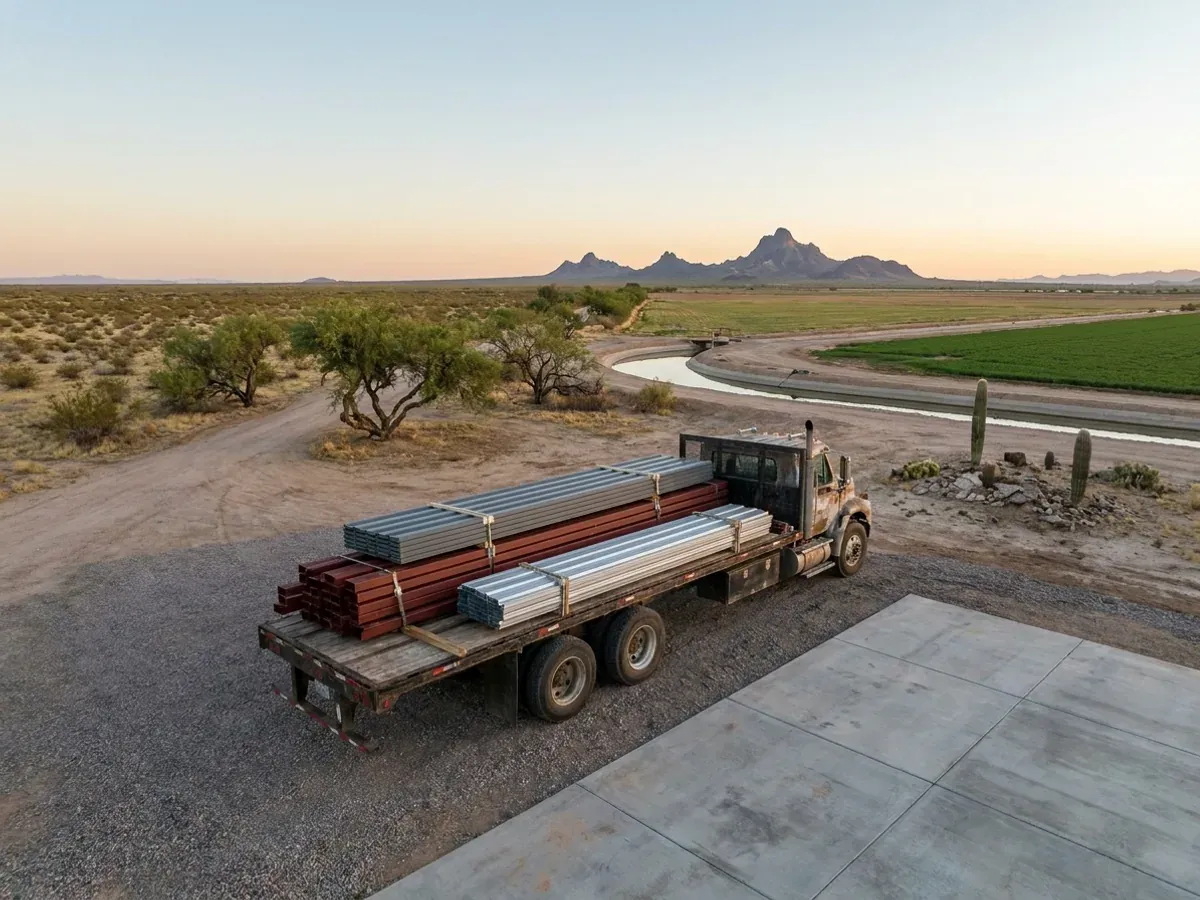
The frame is fabricated and delivered on a date we confirm with you, once the slab has cured and the site can take a loaded truck. The monsoon sets the calendar. The National Weather Service dates Arizona's monsoon season from June 15 to September 30, and its Phoenix office warns that storm gusts almost always exceed 40 mph. We schedule delivery and staging so a loose stack of roof panels is never sitting out in a July afternoon.
Erection, or the drawings for you to do it
Our crews stand the frame, plumb it, bolt it to the anchor pattern and close in the roof and walls. If you would rather erect it yourself, you get the erection drawings, the anchor bolt layout and answers to your questions as you go. Either way the connections are checked before insulation and liner panels cover them, and where your jurisdiction inspects framing, that inspection happens at the same point.
In the low desert, the termite decides the frame
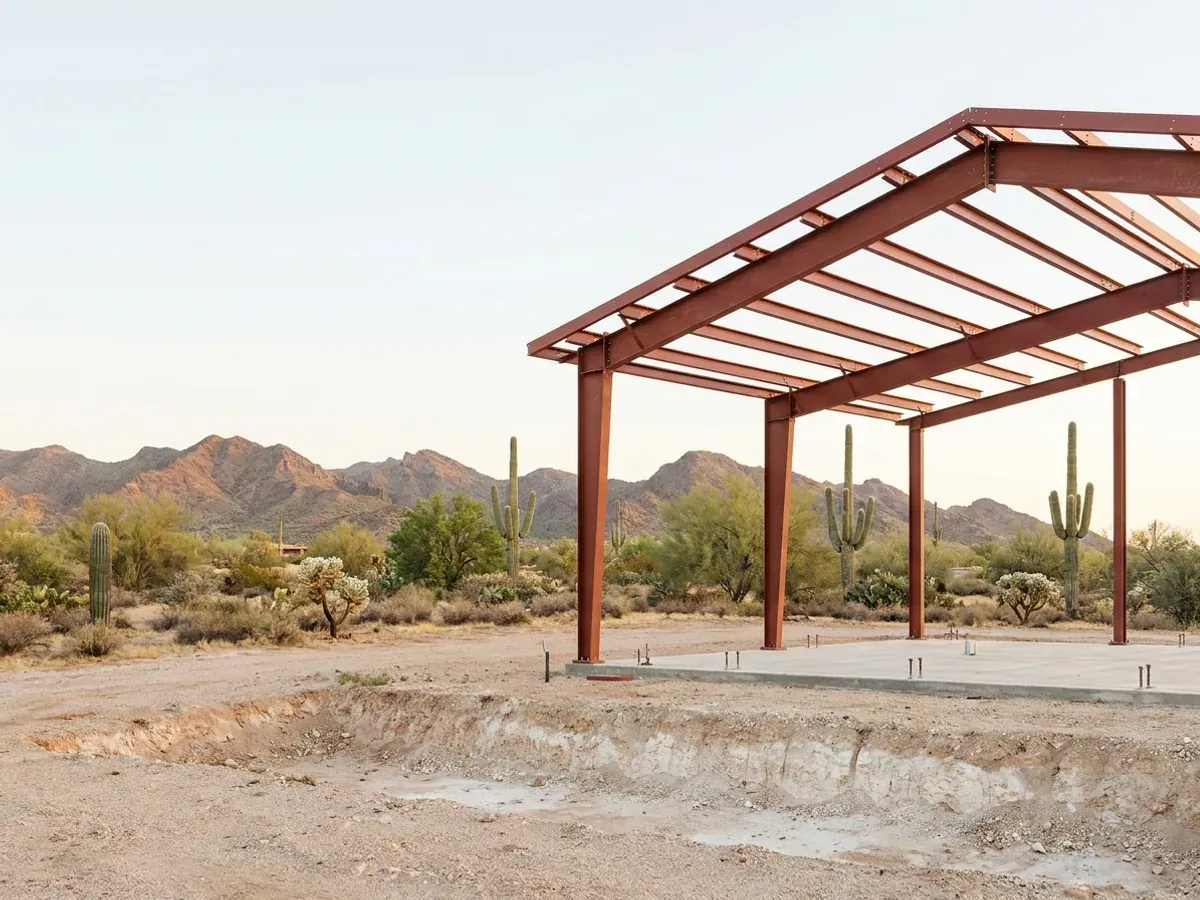
A 2005 University of Arizona Extension publication counts eighteen termite species commonly found in Arizona and calls subterranean termites major urban pests throughout the state. Its most destructive, the desert subterranean termite, is most common below 4,000 feet in the Sonoran Desert and feeds on posts, utility poles and structural timbers in floors and rafters. Drywood termites never touch the soil at all. A red-iron frame is not on the menu, which is why our kits are steel.
Barndominium Kits across Arizona
In Arizona two things change as you cross the state: who has authority over the parcel, and how high it sits. A city, a county and tribal land each answer the permit and zoning questions differently. The low desert around Phoenix, Tucson and Yuma trades snow for heat, termites, monsoon wind and dust; the high country around Flagstaff, Prescott and the White Mountains adds snow load, frost depth and, in forested country, wildfire. Soil, water and septic are settled for every parcel before anything is drawn.
Barndominium builders across Arizona.
Every city and county we serve has its own answer on permits, water, septic and design figures. The service area pages set out what each one publishes.
What actually decides the price
Square footage is the number everyone leads with, and it is rarely the one that moves a barndominium budget. These four do.
-
Clear span and eave height
A wider clear span and taller eaves mean heavier frame sections and bigger footings under each column. An RV bay or a two-storey living wing is usually what pushes a kit up a size.
-
Where the parcel sits
A kit for a Valley lot with no ground snow load is a lighter frame than one for Flagstaff's 60 psf. Mountain parcels also add drift where a lower roof meets a taller one, and that load is designed for separately.
-
Doors and openings
Every large overhead door interrupts the wall bracing and needs a framed opening designed for the wind. Windows and doors on the west wall also cost more to shade, so the opening schedule is worth settling early.
-
How complete the package is
A bare frame, a dried-in shell and a shell with insulation, liner panels and trim are three different quotes. Say which one you are comparing before you compare two kit prices.
Barndominium Kits in Arizona: common questions
8 questions we get asked most often about building in Arizona. If yours is not on the list, ask it directly.
What comes in an Arizona barndominium kit?
Is a kit the same as a modular or manufactured barndominium?
Why steel instead of a wood kit in Arizona?
Will a kit bought online work on my land?
Can I put the kit up myself?
Do metal panels make the house too hot?
What foundation does a kit need?
How long does it take to get a kit?
Keep reading
The pages that answer the next question this one raises.
Barndominium Cost in Arizona
What the shell is as a share of finished cost, so a kit price is read correctly.
Read itSteel Construction
Why the kit is red iron: termites, monsoon wind and wide spans.
Read itCustom Plans
What has to be drawn before a kit can be sized to your parcel.
Read itBarndominium vs Modular Home
How a kit, a modular home and a manufactured home differ before you compare prices.
Read itReady to put barndominium kits against a real plan? Start there and the rest follows.
Tell us about the land
Tell us where the parcel is and what you want on it, and we will come back with who has jurisdiction, what the land needs before it can be built on, and how we would build it. Starting the survey costs nothing.